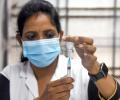
While Covishield supplies would meet the target of 500 mn doses between August and December, it looks like Covaxin would miss the target of 400 mn unless the partner sites of Bharat Biotech ramp up very rapidly, reports Sohini Das.

But no extra risk after second dose, shows study led and funded by drug maker, reports Sohini Das.
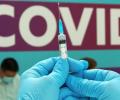
The government may look at areas around Thonnakkal, in Thiruvananthapuram district, for the facility. If successful, this would be one of the few sites of Sputnik V owned by Russian firms outside that country. Shine Jacob and Sohini Das report.

'The Centre is planning to procure five million vials of Remdesivir ahead of the third wave. What's better is that this time, the government is paying us in advance,' said a senior executive of a Mumbai-based pharma player which makes Remdesivir. Sohini Das reports.

The death of a 11-year-old boy due to 'bird-flu', even before the devastating effects of the second Covid wave have waned, has alarmed the medical fraternity though they assert that human-to-human transmission of H5N1 virus is extremely rare. The event has also put the Rs 90,000 crore domestic poultry industry which was seeing some uptick in demand after months of low sales last year into a spot of bother, as any curb on sale or production of eggs or chicken could have a devastating impact on its revenues. It is estimated that around 60 million people are directly impacted by the poultry sector in India. H5N1 virus, also commonly known as bird flu, is known to spread from chickens but other birds such as ducks and crow are also carriers of the virus.
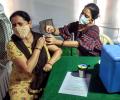
So far, no other vaccine has been approved globally for children below 12 years. Sohini Das reports.
The medical devices, which have been in high demand during the Covid-19 pandemic, will now see a drop in prices, as the earlier margins were up to 709 per cent for some of these products.
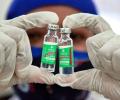
SII would be scaling up its AstraZeneca-Oxford vaccine manufacturing capacity to 200 million doses a month from 100 million a month now, reports Sohini Das.

'We have the technical expertise, and international collaborations. We also have robust real-time data. We are a university of pandemic management. If the ministry neglects the role of NCDC, it is the loss of the country'
Three entities are at the centre of this controversy: The Brazilian government, Bharat Biotech and a Singapore-based company called Madison Biotech.
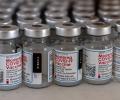
However, before the Moderna and Pfizer messenger ribonucleic acid (or mRNA) vaccines come to India via this route, the legalities around the indemnity clause will have to be settled, reports Sohini Das.
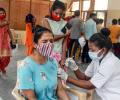
A June 11 survey by cLocalCircles across 299 districts puts overall vaccine hesitancy levels at 18 per cent, with 11 per cent of the respondents saying they were not convinced if the currently available vaccines would protect them against the new strains; and 5 per cent said they do not plan to take the vaccine at all.

'I have done enough work for many years.' 'This is a decision that many people at my age need to review.' 'I may become an exit example for people to study.'
By 2022, there is a plan to make an mRNA-technology vaccine, for which it has tied up with Canadian firm Providence Therapeutics.
'The key purpose of vaccination is to prevent hospitalisation, severe disease, and death.' 'All vaccines work equally, although mild disease cannot be prevented.'
We have applied for marketing authorisation to the EMA through AstraZeneca. We will not sell the vaccine in the EU, said a company source.

While Bharat Biotech's Covaxin is in trials among children already, Serum Institute of India will begin Novavax vaccine trials on children from July, whereas the Pfizer vaccine has been approved for adolescents in the United States; and Cadila Healthcare's ZyCoV-D has done trials on 12 year-olds and above already, reports Sohini Das.

865 million Indian adults require vaccination.

While virologists say theoretically the vaccine that works on Delta should work on the Delta Plus variant as well, more research is needed.

Easier dilution norms for mega initial public offerings (IPOs) have come into effect. Companies with post-listing market capitalisation (m-cap) of more than Rs 1 trillion will not be required to dilute a minimum of 10 per cent. The move to relax dilution norms is seen as a precursor to Life Insurance Corporation's IPO. The central government has said companies with an m-cap exceeding Rs 1 trillion will have to dilute Rs 5,000 crore and at least 5 per cent of their m-cap. Experts said the earlier framework discouraged large companies from listing since they were forced to offload a large volume of shares during the time of their IPO.
 © 2026 Rediff.com - Advertise with us - Disclaimer - Privacy Policy - Sitemap - Feedback - About us - Terms of use - Grievances